A Narrow Lane or a Wide One? Two Ways Teams Use the Flanks
Narrow lane or wide flank football shapes pressure, passing options and space behind the defence; learn what each approach asks of a team.
The common mistake in choosing narrow lane or wide flank football is treating width as a fixed team identity: pack players close together, or station them near the touchline, and expect the pattern to take care of itself. That can leave a side crowded around the ball or stretched too far apart to support it. The useful question is what each arrangement asks opponents to defend, and what space it leaves available next.
What changes when play is concentrated in a narrow lane?
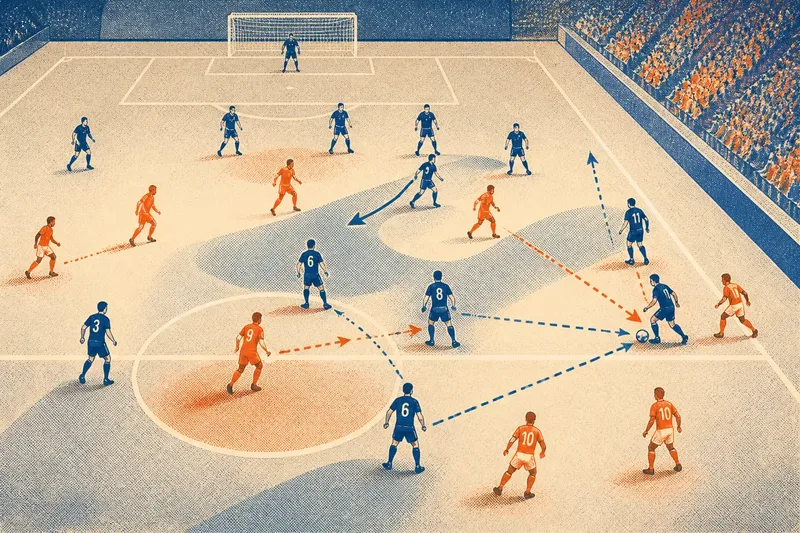
A narrow channel draws several attacking players towards one side of the pitch or into a compact corridor. The ball carrier can find short passes, quick combinations and nearby support. If a midfielder drops towards the ball and a forward checks into the same pocket, they can create a small numerical advantage before the defence has time to settle.
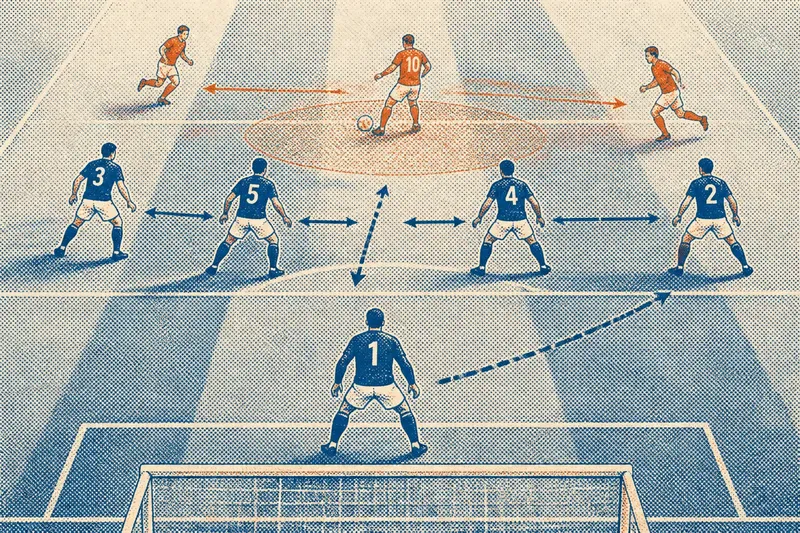
The trade-off is visible in the space left behind the cluster. If the defending side can close the channel with a compact line, a short pass may lead only to another player under pressure. Teammates on the far side might be too distant to offer an immediate escape route, while a turnover can leave the team needing to recover across open ground.
Narrow play is not simply a crowd around the ball. It works best when one player can turn, combine or draw a defender out, and another can use the gap that movement creates. Think of it like a queue at a doorway: bringing people together helps them exchange places, but it does not help if nobody can move through.
What does a wide flank offer?
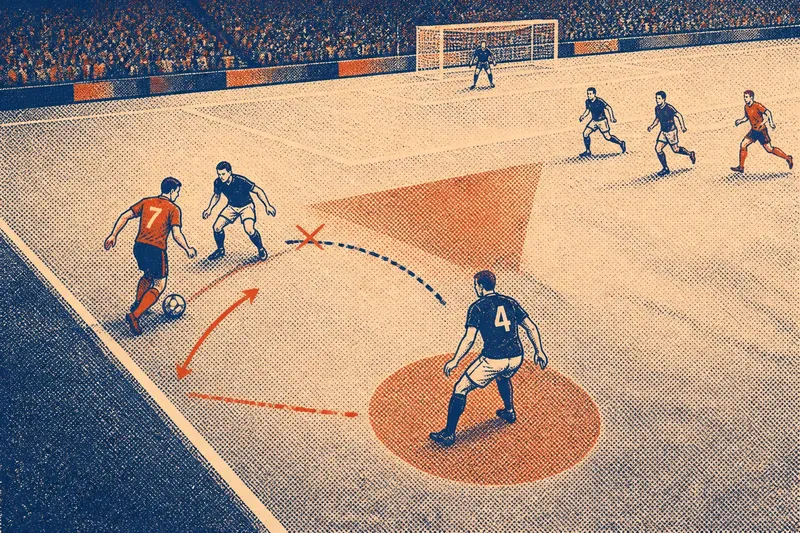
Using a wider flank places players nearer the touchline and spreads the opposing defence across more of the pitch. A wide player may receive with room to face forward, while a teammate inside can become an option for a pass back or a diagonal ball. If a defender leaves the line to close the flank, a channel may open between that defender and the rest of the back line.
That extra room has a cost. A wide receiver can be isolated if the nearest teammate is too far away, and a pass towards the touchline can become predictable if the opponent can trap the ball there. A cross also depends on teammates arriving in useful areas; simply reaching the edge of the pitch does not create a good finish.
Width can also be a way to move the defence without immediately attacking down the side. A team can circulate the ball from one flank to the other, making defenders adjust their positions, then look for a pass into the space between them. The aim is not width for its own sake, but a useful change in the opponent’s shape.
How should a team judge which lane suits the moment?
Start with the opponent’s distances and reactions, not a permanent rule. If defenders close the centre quickly but leave their wide players exposed, a pass towards the flank may give the receiver time to face up the pitch. If the opponent protects the touchlines and leaves gaps around a midfielder, a compact combination may be more promising.
- Check the nearest support: Can the receiver make a short pass without turning into pressure?
- Read the defender’s choice: Does an opponent step out, hold position or hand the attacker to a teammate?
- Look at the far side: Is there a player ready to receive if the ball is switched?
- Notice the next space: If the first pass succeeds, is there a route forward or only another defender?
- Watch the recovery shape: If possession is lost, are teammates close enough to challenge or delay the next attack?
These checks are connected. A narrow lane may be attractive because nearby players can combine, but it becomes risky if everyone is ahead of the ball. A wide flank may provide room to advance, but the receiver needs a supporting angle and teammates positioned to respond if the pass is cut out.
How can players switch between narrow and wide play?
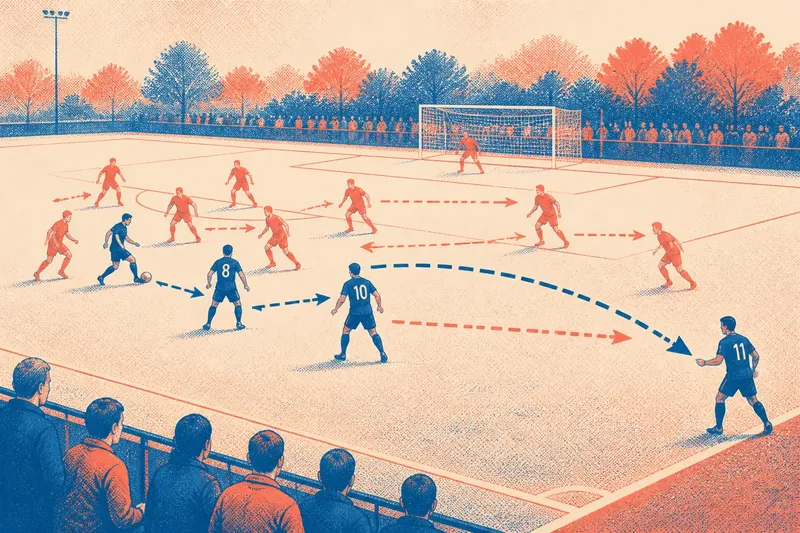
Switching is most effective when the first shape changes what defenders must watch. A compact group can draw opponents towards the ball; a pass out then asks the far side to attack space that has been left unguarded. The reverse also works: a team can draw defenders wide, then pass inside to a player arriving between their lines.
Imagine a team facing a compact defence that crowds its left side. A midfielder could combine with a forward there to attract another defender, then pass across to a teammate holding the opposite flank. The intended observable result is a receiver with more room to control the ball and choose a forward pass, rather than an automatic scoring chance. If the defence shifts early, the team can instead keep the ball on the left and search for a short pass through the crowded area.
That flexibility depends on players recognising the same cue. A switch can be slow or exposed if the receiver is not ready, so the player on the far side needs to scan before the ball travels. Meanwhile, the nearby group should offer a safe return option rather than abandoning the ball carrier as soon as the team changes sides.
What should players notice as the match unfolds?
Track what happens after the first pass into each lane. Does the receiver get time to turn? Does a defender follow, and if so, who takes over that space? Is the next action a forward pass, a backward reset or a loss of possession? Those observations reveal whether the opponent is being moved or simply receiving the ball in a different place.
Also notice how the game’s conditions alter the available space. A flank can feel narrower when a touchline limits the receiver’s escape, while a central channel can become crowded as both teams compress around the ball. Players should adjust their supporting distance and passing choice to what is actually open, rather than assuming the same pattern will work throughout the match.
Which questions help distinguish the two approaches?
Is narrow play the same as playing through the middle?
No. A team can concentrate several players along a side channel, close to the touchline, rather than in the centre. The defining feature is the compact group and its nearby combinations, not the exact location.
Does a wide flank always mean crossing?
No. A wide player can carry the ball, pass inside, combine with a teammate or help draw a defender away from the centre. Crossing is one possible action, not the purpose of width by itself.
When is a switch of play useful?
It is useful when the opponent has shifted towards the ball and the far side offers a clearer route forward. If the far-side receiver is marked or the pass is difficult to complete, keeping possession nearby may be the better choice.
Can a team use both approaches in the same attack?
Yes. A team can gather players in a narrow lane to attract pressure, then spread the ball towards the opposite flank, or move wide before combining inside. The choice depends on how defenders respond and where teammates can support the next action.
Narrow lane or wide flank football is best read as a decision about where to invite pressure and where to seek the next opening. Watch the defender who has to move, then watch the space that movement leaves. That second glance often tells you more than the team’s starting shape.