Watching a Windy Match: Follow the Second Ball
Follow the second ball in a windy match to see how flight, landing zones and quick repositioning shape the next phase of play.
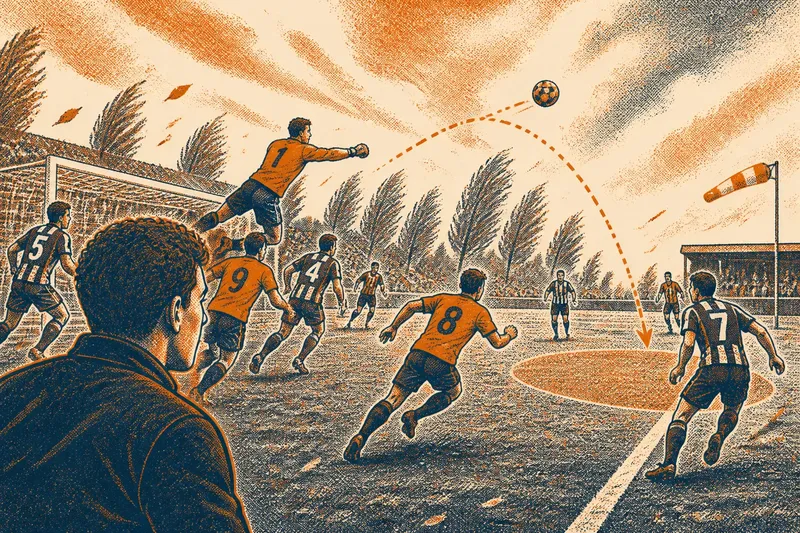
The common mistake when watching a windy match is to keep your eyes on the player making the first touch. The ball may already be sailing elsewhere, and the cost is missing the contest that decides who gets the next attack. To follow the second ball, watch the flight, predict where it might land, then notice how players adjust before it arrives.
These field notes are about reading that brief, untidy interval after an aerial contest: a goalkeeper’s punch, a defender’s clearance, a long pass or a cross caught by a gust. Wind does not dictate the outcome, but it can make familiar distances and timings less reliable. The useful question is not simply who wins the header. It is who is ready for what comes next.
Where does the ball seem likely to land?
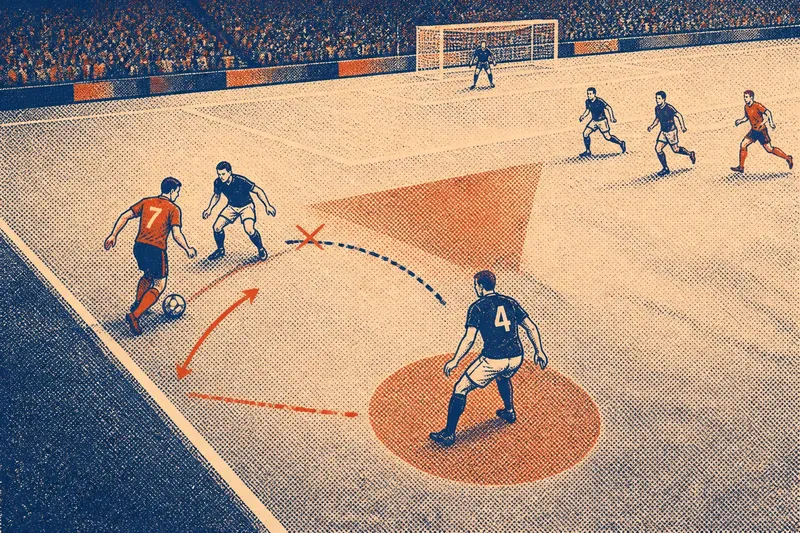
Start with the ball’s path, not with the player beneath it. A long clearance that appears to be dropping straight down may drift across the pitch. A cross can slow, dip or carry beyond the point where a runner expected to meet it. Check whether the flight changes as the ball rises and falls; a single glance at its early direction can mislead.
Then look at the likely landing area as a patch of ground rather than a precise spot. Wind, spin, a deflection and the angle of the kick can all shift the bounce. Players read those clues too, but they may be working from different assumptions. One turns to attack the drop; another backs away, expecting the ball to carry.
Choose a reference point that is easy to see: the top of the penalty area, a touchline marking or the space just beyond a cluster of midfielders. Ask yourself whether the ball is moving towards that landmark or away from it. This gives you a rough map without demanding a perfect prediction.
Who is positioned for the next touch?
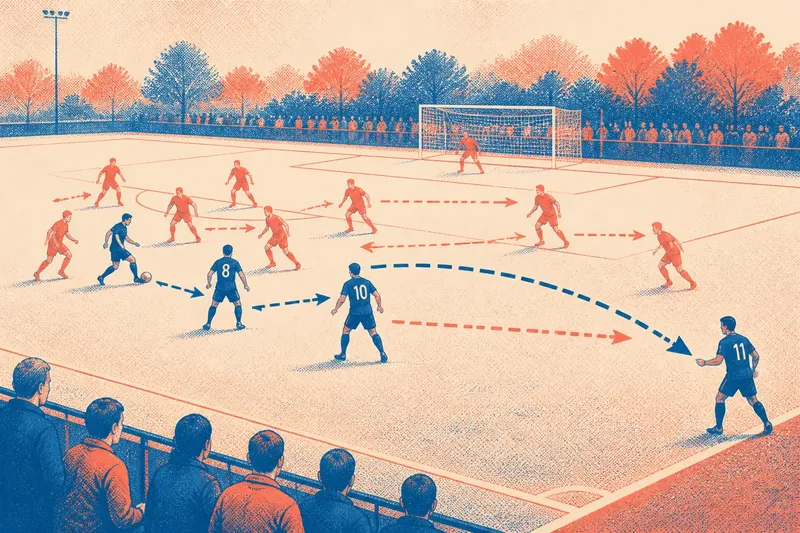
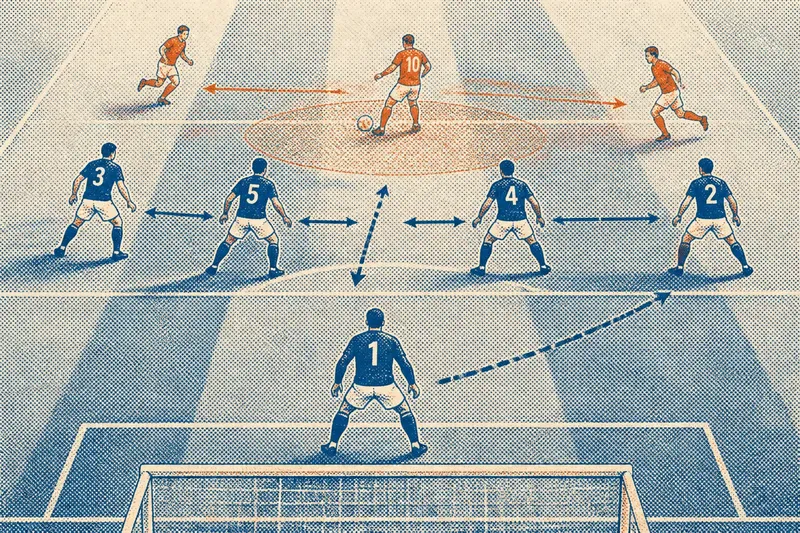
After the first aerial contact, follow the players who are not challenging for the ball. They often reveal where a team expects the second ball to fall. A midfielder may slide across behind a forward, a full-back may hold a little deeper, or a central player may start towards a loose landing zone before the header is made.
Notice the difference between a player facing the contest and one facing the next phase. The first may be trying to win the initial duel. The second can see the likely knockdown and move early, but risks being caught out if the ball travels elsewhere. A team’s shape often looks untidy for a moment because several players are choosing between those jobs.
Do not treat a compact group as proof that a side has read the situation well. If everyone converges on the same patch, an opponent may be free to collect a flick-on beyond them. Conversely, a player waiting alone can look isolated until a teammate directs the ball into that space.
How does the first contact change the contest?
Aerial contests rarely end neatly with one player bringing the ball under control. The first touch might be a glancing header, a shoulder-to-shoulder challenge, a goalkeeper’s punch or a defender’s hurried clearance. Each changes the speed and direction of the next action. A weak touch can leave the ball hanging; a firm clearance may send it into a different zone altogether.
Watch the contact, then shift your attention quickly. If a forward flicks the ball on, the relevant race may be between a runner and a retreating defender several strides away. If a defender heads it upwards rather than out, the next challenge may come from a midfielder arriving late. The player who makes the first contact is not automatically the player who shapes the next phase.
Listen, too, for the goalkeeper’s call or a teammate’s shout, but treat sound as a clue rather than a verdict. Players may be calling for a header, warning of a runner or claiming the ball. Their movement after the call shows whether they trust the same plan.
What should you track after the ball drops?
Once the ball lands, look for the first player who can act on it and the nearest opponent who can interfere. That pair tells you whether the next phase is likely to be a controlled pass, a rushed clearance or another scramble. The ball can bounce awkwardly, so a player’s distance from it matters less than whether their body is set to move in either direction.
Then scan outward. A side that gathers a loose ball may have a short outlet nearby, while another player makes a run into open space. The opponent may respond by stepping towards the carrier or recovering towards goal. A second ball can therefore expose a choice: press immediately and risk space behind, or drop back and allow the carrier time.
Imagine a hypothetical match in which a defender clears a high ball from just outside the penalty area and a crosswind nudges it towards the touchline. A midfielder who had been watching the flight moves across before the bounce; an opposing winger, expecting a central drop, is still turning. The midfielder reaches the loose ball first and has a passing option inside. The observable change is not merely possession: one team can play forward while the other is still rearranging itself.
How can you read wind without guessing?
Use visible clues across several phases rather than assigning every odd bounce to the wind. Watch whether high balls repeatedly drift in the same direction, whether corners bend away from the goal, and whether players adjust their starting positions for similar kicks. A single misjudged clearance may be down to contact, pressure or a deliberate attempt to send the ball somewhere specific.
Flags and loose material around the ground can help, but conditions near the pitch may differ from those above the stands. The match itself is the clearest evidence: compare the flight of high balls with low passes and notice when the pattern changes. A gust may be intermittent, so a team that has adjusted for one delivery might need to reassess the next.
Keep the analogy simple: a ball in gusty air behaves a little like a paper shopping bag caught on a pavement. Its route can shift after it looks settled, so watching the last few metres matters as much as noticing where it began.
What questions help you follow a windy match?
Why do teams gather around a likely landing area?
Players gather to challenge for the loose ball, contest a knockdown or make the next pass harder for the opposition. The group’s position can also leave space beyond it, so check who is stationed outside the crowd.
Why can a clearance become an attacking chance?
A clearance may fall to a teammate who is facing forward while opponents are moving back towards their own goal. If that player controls the second ball, a hurried defensive action can turn into a quick pass or run.
How can you tell whether a player misread the flight?
Look for a change of direction after the ball has already passed the point the player seemed to expect. One awkward attempt is not enough to explain; the next similar aerial ball may show whether the player adjusts their starting position.
Should you follow the ball or the players?
Follow the ball through the first contact, then shift to the players positioned for the next one. If you keep watching only the carrier, you may miss the movement that makes a loose ball useful to one side.
What is worth noting from the stands?
- Flight: Does the ball carry, dip or drift as it descends?
- Landing zone: Which visible pitch marking gives you a useful reference?
- First contact: Is the ball headed, punched, flicked or cleared?
- Support: Who is already moving towards the likely drop?
- Space outside the contest: Is anyone waiting beyond the cluster?
- Next action: Does the team play forward, hold possession or clear again?
Keep those observations tied to what you can see, rather than treating wind as a complete explanation for every loose ball. The second ball is often a contest over timing and position as much as strength. Follow the flight, find the players who have prepared for the bounce, and you will see how a windy match changes shape before the next pass is made.
For a simple viewing habit, pick one aerial contest and stay with it until the next team has either secured the ball or sent it back into the air. That small pause is where the second ball becomes easiest to read.